Dental Health

Our Clients

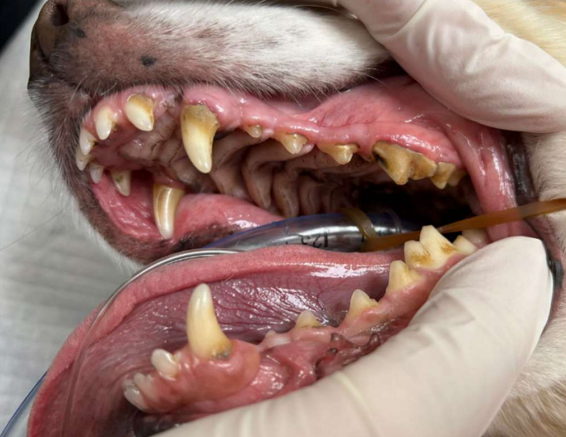
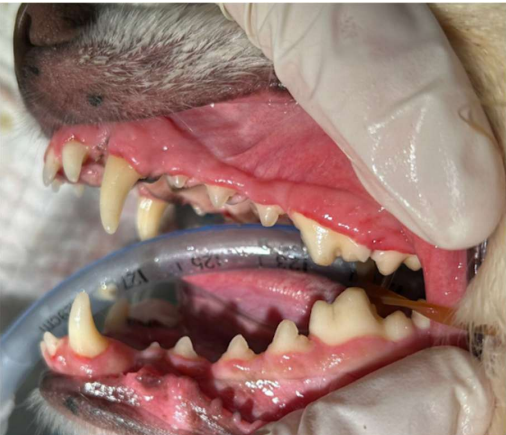
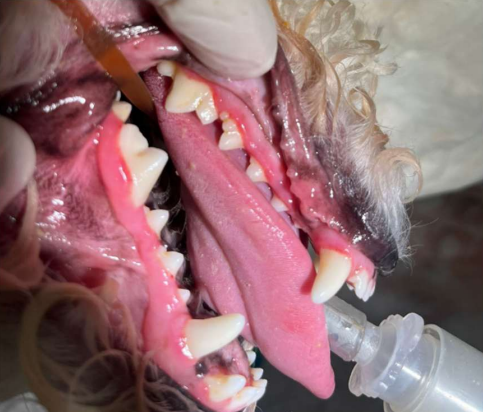
Some of our lovely clients have kindly allowed us to share photos of their pets’ mouths to help illustrate just how important proper dental care is. We can thoroughly clean pets’ teeth, reaching those tricky areas where tartar likes to hide.

Before
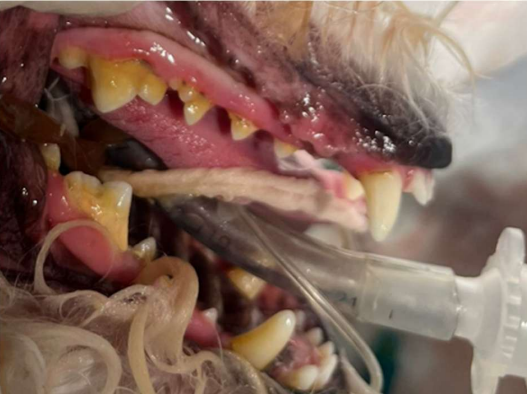
After
What does PPT stand for?
PPT stands for Professional Periodontal Treatment. This is often the term used to describe the scaling and polishing of pet’s teeth.
What are the benefits of PPT?
Professional dental cleaning removes tartar and bacteria that can cause pain, gum disease, bad breath, and even aƯect organs like the heart and kidneys due to bacteria spreading from the mouth. We also clean above the gum line to prevent plaque accumulation and to reduce the bacteria that cause periodontal infection.
Why does my pet need to be under anaesthetic?
When scaling a pet’s tooth, we ensure the scaler has contact with the entire surface of the tooth, including the part of a pet’s tooth that is closest to the tongue. Patients need to be completely still for this procedure to ensure we can accurately clean each tooth and to prevent injury to a pet if they move suddenly.

Even well-trained, cooperative pets are not suitable candidates for conscious dental treatment. The Royal College of Veterinary Surgeons (RCVS), our regulators, states that “anaesthesia-free dental procedures”, such as attempting to scale and polish a pet’s teeth while they are awake, are not appropriate and are not in the best interests of animal welfare.

Conscious dentistry also risks inhaling water, bacteria, or dental debris into the lungs.

What is the recovery period for PPT?
Providing your pet did not need to have any teeth extracted, the recovery is usually very quick. With any anaesthetic, pets can be slightly woozy for around twenty-four hours, so it is best to keep them in a calm environment that evening.
What is the cost of PPT?
Pricing can vary depending on the size of your pet, the condition of their teeth, and whether dental X-rays or extractions are required. Once a vet has assessed your pet’s mouth, they will be happy to discuss costs with you and provide an estimate.

In some cases, dental X-rays are recommended. These are a valuable tool that allow our vets to assess tooth and nerve health, and to identify hidden issues such as bone loss, root infections, and damaged teeth.